You keep a bathroom clean with less effort by stopping buildup before it hardens: squeegee the shower after use, wipe the sink in 30 seconds each day, let air move so surfaces dry, and do one short weekly clean instead of a long monthly scrub. Soap scum, hard-water spots, and mildew all need moisture and time to form, so cutting either one makes every cleaning session easier.
Most of the heavy scrubbing people dread in a bathroom is the result of leaving residue for weeks. Below you will find what the grime actually is, the small daily habits that prevent it, a realistic weekly routine, and how to handle mold and stubborn stains safely.
Know what you are cleaning
Bathroom grime is not one thing, and the right cleaner depends on which type you have.
| Type of buildup | What it is | What works |
|---|---|---|
| Soap scum | Soap and body oils bonded with minerals in water | Surfactant or alkaline bathroom cleaner, or dish soap and a nonscratch pad |
| Hard-water deposits | Calcium and magnesium left when water dries | Mild acid such as diluted white vinegar, or a descaling cleaner |
| Mildew and mold | Fungal growth on damp surfaces and grout | Scrub with detergent and water, dry fully, fix the moisture |
| Toilet ring | Minerals at the waterline | Toilet bowl cleaner and a brush; a pumice stick for stubborn rings |
| Body oils and toothpaste | Residue around sinks and handles | Damp cloth with mild soap |
The distinction matters because soap scum is greasy and breaks down best with surfactants and alkaline cleaners, while mineral spots dissolve in mild acids. Dish soap alone does little on limescale, and vinegar alone is often weak on heavy soap scum. If you have both, use the cleaners one at a time and rinse well between them. The CDC says to never mix bleach with ammonia or any other cleaner, and bleach combined with acids, including vinegar and many toilet bowl cleaners, releases hazardous gas. Wear rubber gloves and run the fan or open a window when you clean.
Cut down moisture, because moisture is the root problem
Water that dries slowly leaves minerals behind and feeds mildew. The EPA’s mold guidance names moisture control as the key to preventing mold, and recommends keeping indoor humidity below 60 percent (ideally 30 to 50 percent) and running a fan or opening a window in bathrooms. That makes drying the highest-leverage move in the whole room.
- Run the exhaust fan during every shower and for a while afterward, often around 20 minutes. If you have no fan, crack a window or leave the door open.
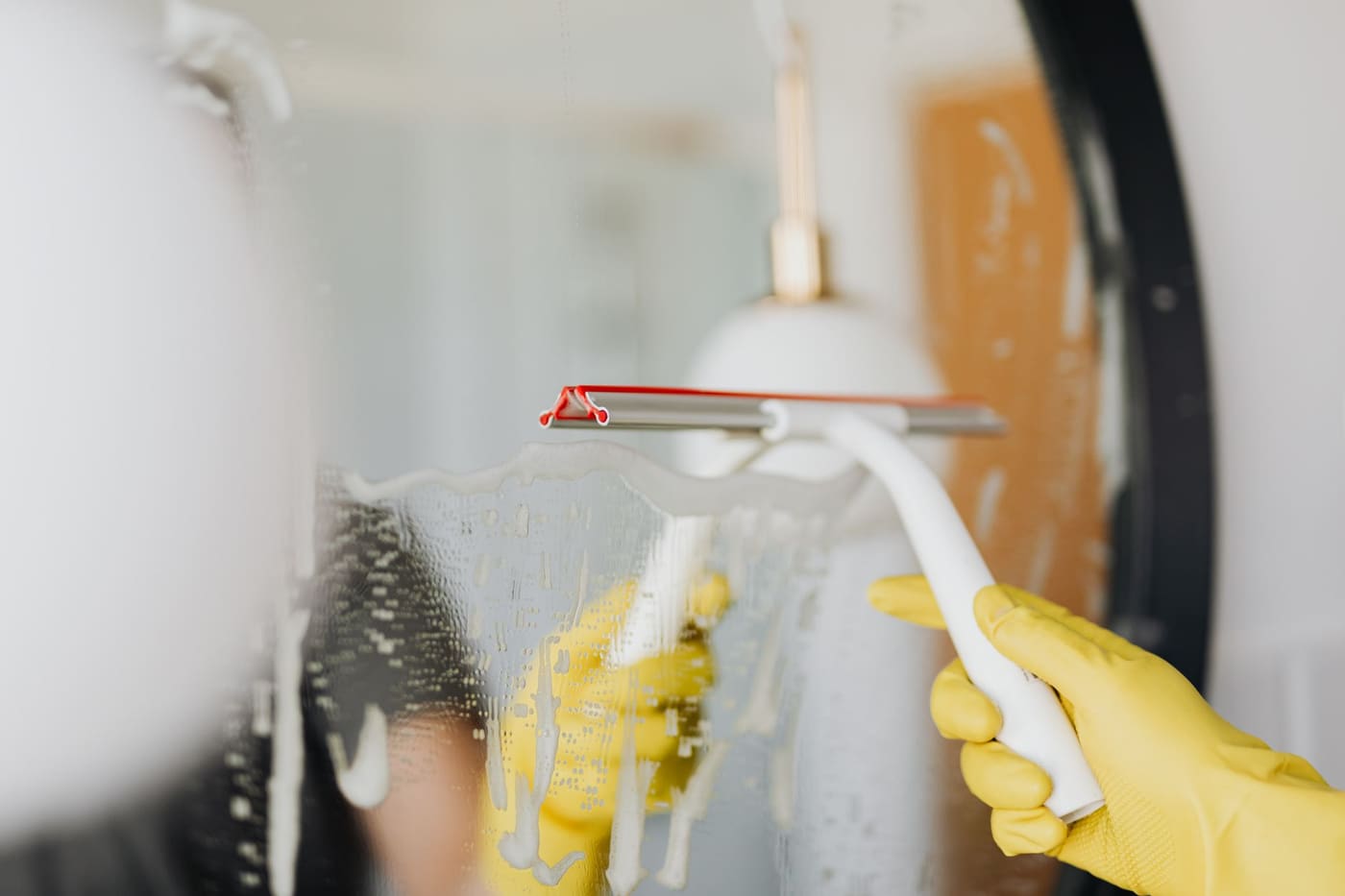
- Squeegee the shower walls and glass after use. It takes 20 to 30 seconds and removes the water that would otherwise leave spots and scum.
- Hang towels so they dry fully between uses, and wash them regularly. Wet towels left bunched up produce odor and raise humidity.
- Leave the shower curtain spread open after bathing so it dries. Machine wash fabric or plastic liners on a gentle cycle following the care label, or replace plastic liners when they are stained.
- Dry the bath mat on a rack or wash it regularly.
If the fan is weak or noisy, or the ceiling around it shows condensation or mold, the fan may be undersized or the duct clogged or poorly vented. Fan repair or installation involves electrical wiring, so beyond cleaning the visible grille, hire a licensed electrician.
Do the daily 60-second reset
A tiny daily habit replaces a lot of weekend scrubbing. Keep a spray bottle and microfiber cloth in a drawer or cabinet within arm’s reach, because tools that are easy to grab are the ones people use.
- After brushing teeth, wipe the sink and faucet with the cloth. This removes toothpaste, soap, and water spots before they dry.
- Squeegee the shower or wipe the walls with a towel after your shower.
- Put hair tools, razors, and bottles back where they belong. Clear counters take seconds to wipe.
- Hang towels and straighten the bath mat.
Liquid soap in a pump leaves less slimy residue than a bar sitting in a puddle, and a soap dish that drains is better than one that holds water. Replace a cracked shower curtain liner.
Make the space easier to clean
Design choices decide how fast a bathroom cleans. You can improve a lot without renovating.
- Reduce items on surfaces. Every bottle on a tub ledge must be lifted during cleaning. Keep only what you use daily, and store the rest in a caddy, wall shelf, or cabinet.
- Use wall-mounted or hanging organizers so bottles are not sitting in standing water.
- Choose a toilet brush with a closed holder, and rinse it under flush water and let it drip dry.
- Keep supplies in the room: a bathroom spray, toilet cleaner, a nonscratch scrub sponge, two cloths, and gloves. This ties closely to the principles in organizing a home so it stays easier to clean.
- Maintain grout and caulk. Cement-based grout is porous, so a sealer can make it easier to wipe; follow the product instructions and your tile maker’s advice on timing. Caulk that is cracked or black with mold should be removed and replaced.
Textured or lighter-patterned surfaces tend to show water spots less than glossy dark ones, which is worth considering the next time you replace a mat, curtain, or fixtures.
The weekly clean: about 15 to 20 minutes
With daily upkeep in place, a weekly clean is a quick job. Follow this order so you never redo anything.
- Spray first. Apply cleaner to the shower or tub walls, toilet bowl, and sink. Let it sit for the time on the label.
- Toilet bowl: Apply cleaner under the rim and scrub with the brush.
- Sink and counter: Wipe from the back to the front, then clean the faucet and handles.
- Shower or tub: Scrub with a nonscratch pad or long-handled brush, top to bottom. Rinse with water.
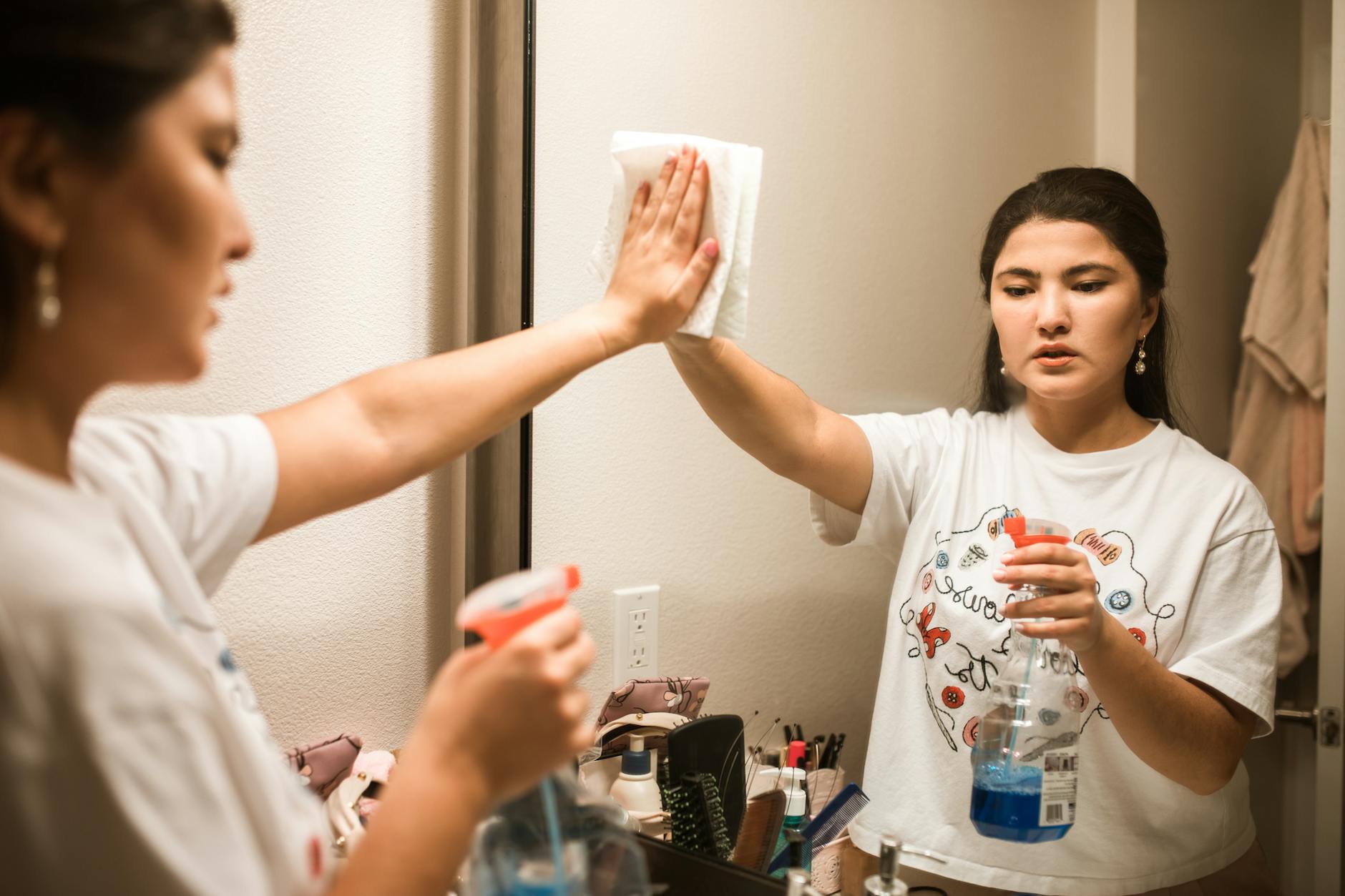
- Mirror: Spray glass cleaner on the cloth, not the mirror, and wipe.
- Toilet exterior: Wipe the tank, handle, seat, and base last, using a separate cloth.
- Floor: Sweep or vacuum, then mop, paying attention to the area behind the toilet and along the tub.
- Trash: Empty and replace the liner.
Wash the cloths on hot afterward, and keep the toilet cloth separate from those used elsewhere. For where this fits among other chores, the weekly versus monthly cleaning breakdown is a handy reference. If a full reset is on your list, the guide to what to focus on when deep cleaning a home covers the scrubbing jobs a weekly clean skips, and cleaning for guests shows how to get a bathroom presentable quickly.
Handle mildew and stubborn buildup safely
For small patches of mold or mildew on grout, caulk, or a shower curtain, the EPA says that if the moldy area is less than about 10 square feet (roughly a 3 foot by 3 foot patch), you can in most cases handle the job yourself. Scrub with detergent and water, rinse, and dry the area completely. The EPA does not recommend using bleach or other biocides as a routine part of mold cleanup, because dead mold can still cause allergic reactions; the goal is to remove it and fix the moisture. If you do choose a bleach-based product on a nonporous surface, read the label, ventilate, wear gloves and eye protection, and never combine it with any other cleaner.
For hard-water film on glass and chrome, a cloth soaked in diluted white vinegar and held against the area for several minutes, then wiped and rinsed, often removes it. Do not use vinegar on natural stone such as marble or travertine, and avoid acids on unsealed grout, as they can erode it. Use a stone-safe cleaner instead.
Scratching is a risk. Avoid steel wool and gritty powders on acrylic tubs, fiberglass, and coated glass. A melamine sponge is mildly abrasive, so test it in a hidden spot.
When to call a professional
Cleaning does not fix every problem. Contact a professional if you see:
- Mold covering more than about 10 square feet, or mold that returns quickly after cleaning, which can signal a hidden leak or ventilation problem.
- Soft, spongy, or discolored drywall, flooring, or wood near a tub, shower, or toilet.
- Water stains spreading on the ceiling below an upstairs bathroom.
- Persistent sewer odor, slow drains that do not clear, or water damage behind tile.
In homes built before 1978, paint may contain lead, and older flooring and tile adhesive can contain asbestos. Do not sand, scrape, or demolish suspect materials. Leave them undisturbed and have them tested by a qualified professional before any renovation.
Before you combine any products, check the pair with the cleaner mixing checker.
Where this comes from
The mold figures and moisture advice come from the US Environmental Protection Agency’s brief guide to mold, moisture, and your home. The advice on never mixing bleach with other cleaners comes from the Centers for Disease Control and Prevention’s guidance on household bleach. The cleaning routines are common practice rather than research results. Cleaner formulas, labels and local building rules change, so check the product label and your local guidance for current directions.