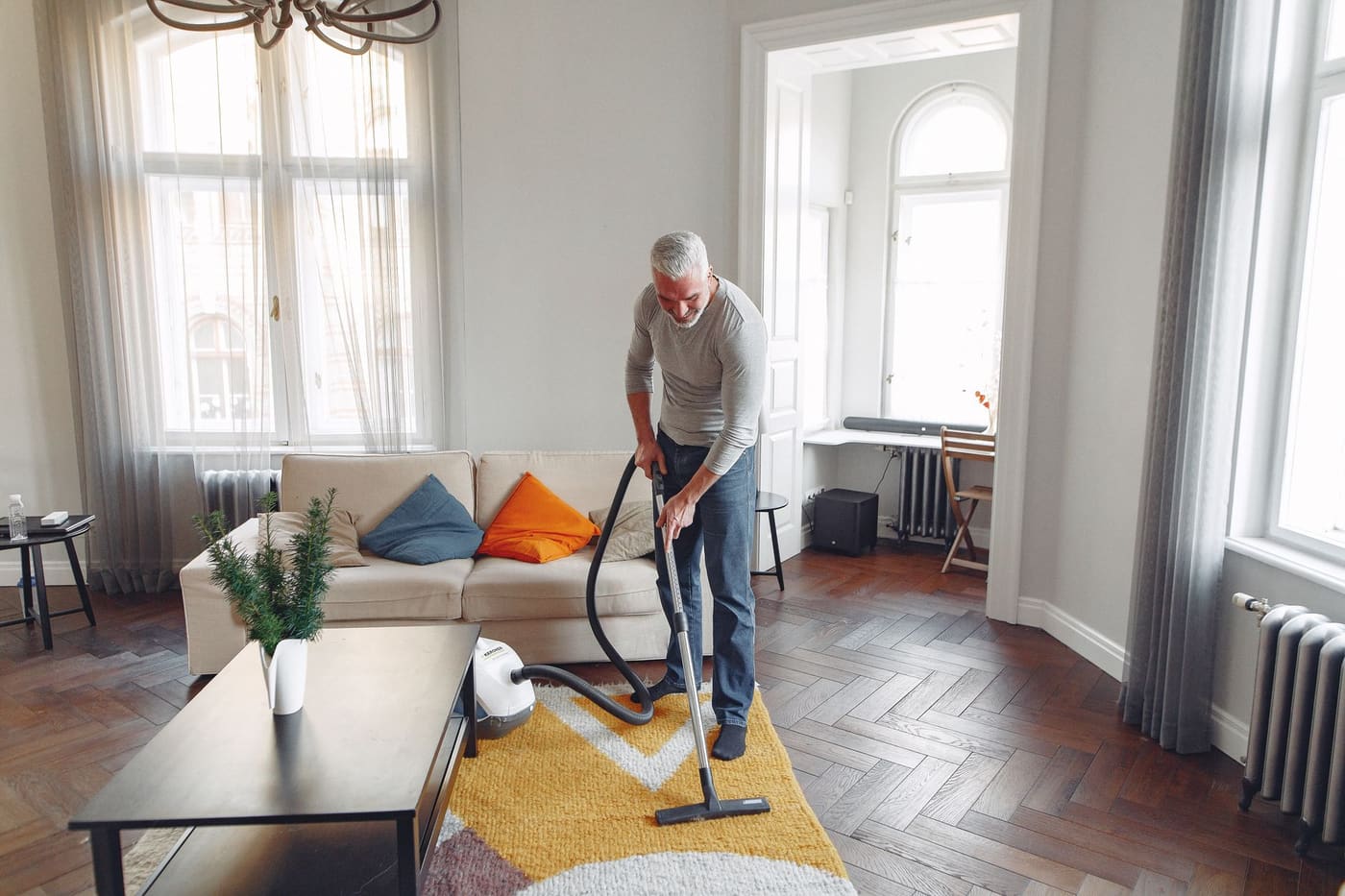
You keep a home cleaner without spending all day on it by doing 15 to 30 minutes of small, repeated tasks every day and saving heavier jobs for a short weekly and monthly routine. The reason this works is simple: most mess is a pile of small things that were not dealt with yet, and a dish or a stack of mail takes seconds when it is fresh and much longer once it has merged with everything else.
A marathon cleaning day feels productive but resets the clock to zero, and the house drifts back within days. The approach below spreads the work out, targets the few things that make a home look and feel messy, and gives you a structure you can follow even when you are tired.
Why marathon cleaning does not stick
Cleaning for four hours on a Saturday has three problems. It is exhausting, so you put it off. It treats every task as equal, so you spend time on low-value jobs. And it leaves six days for mess to rebuild with no system to hold it back.
Small, frequent cleaning works better because soil gets harder to remove the longer it sits. Grease, soap residue, and dust build up in layers. A kitchen counter wiped daily needs a damp cloth; the same counter wiped monthly may need a scraper and a soak. Daily upkeep costs less time overall even though it feels like constant work.
A realistic target is around 20 minutes on weekdays and an hour or so on the weekend, split across a few jobs. These are planning figures, not standards. If your current routine is much heavier, you may be doing monthly work too often or skipping the daily basics.
Focus on the mess multipliers
Some items make a home feel out of control faster than others. Clear these and the whole space looks better even if corners are dusty.
- Dishes in the sink or on counters: Often the largest visual and smell contributor.
- Cluttered flat surfaces: Kitchen counters, dining tables, and entry tables attract items.
- Laundry piles: Loose clothes on chairs and floors create instant visual noise.
- Shoes, bags, and coats at the door: The first thing you see when you walk in.
- Overflowing trash: Affects smell and makes the room feel neglected.
- Crumbs and debris in main walkways: Gritty floors feel dirty even when everything else is fine.
If you have 10 minutes, handle these first. The guide to what to clean when you only have 20 minutes shows how to sequence them when time is tight.
Build a short daily routine
Tie small tasks to things you already do, so they do not rely on willpower. Pairing a new habit with an existing one is often called habit stacking, and it works because the cue is built in.
Morning (5 to 10 minutes)
- Make the bed, which tidies a bedroom visually in under a minute.
- Empty the dishwasher while coffee brews, so dirty dishes have a place to go.
- Wipe the bathroom sink after brushing teeth.
- Start a load of laundry if you have a pile.
Evening (10 to 15 minutes)
- Clear dishes and wipe the kitchen counters and stovetop after dinner.
- Run the dishwasher or wash pots, then empty the sink.
- Do a 5-minute pickup: walk through the main rooms with a basket and return items to where they belong.
- Set out clothes, bags, and keys for tomorrow so the entry stays clear.
- Check the trash and take out anything smelly.
A closing routine like this means you wake up to a reset home, which also makes mornings easier. If you cook often, the kitchen order in cleaning a kitchen faster and more effectively fits straight into the evening reset.
Add a weekly layer for what daily habits cannot cover
Daily habits stop mess from growing but do not remove everything. A weekly session of about an hour handles the rest. A common split:
| Task | Time | Notes |
|---|---|---|
| Bathrooms: toilet, sink, mirror, shower, floor | 15 to 25 min | Per bathroom; spray and let it sit |
| Vacuum main floors and rugs | 15 to 20 min | High-traffic areas first |
| Mop hard floors | 10 to 15 min | Only where needed |
| Dust visible surfaces | 10 min | Microfiber cloth, top to bottom |
| Change kitchen towels and dishcloths | 2 min | Wash on hot |
| Bedding | 5 min plus wash time | Weekly or every two weeks |
| Fridge check and trash day cleanup | 5 min | Toss expired items |
You do not need to do all of it in one block. Splitting it, for instance bathrooms on Tuesday, floors on Thursday, bedding on Saturday, keeps each session short. Tasks on a longer interval, such as baseboards, oven interiors, and window tracks, are covered in the guide to weekly versus monthly cleaning in a busy home.
Set up your home so cleaning is easy
Habits fail when the setup fights them. A few changes make small cleaning realistic.
- Keep supplies where you use them. A spray bottle and cloth in each bathroom and the kitchen mean no trips to a closet. A small caddy for each floor works too.
- Own fewer things on surfaces. Every item on a counter must be moved to wipe underneath.
- Give everything a home. Items without a place become clutter. Hooks, baskets, and bins by the door reduce loose items quickly.
- Use a tool you will actually use. A lightweight stick vacuum can turn a daily floor pass into a few minutes because there is no cord or setup. A robot vacuum can handle daily dust and crumbs on floors but does not replace regular hand cleaning.
- Keep a second set of cloths and mop pads so you can swap them in while the other set is in the wash.
The more organized the home is, the faster it cleans. See the guide to organizing a home so it stays easier to clean for practical ways to cut clutter at the source.
Use timers, batching, and the two-minute rule
A few techniques lower the effort of starting:
- The two-minute rule: If a task takes under two minutes, such as hanging a coat, wiping a spill, or putting a cup in the dishwasher, do it now instead of adding it to a list.
- Timer sprints: Set a timer for 10 or 15 minutes and work on one zone. When it rings, stop. A visible end makes it easier to begin.
- Batching: Do similar tasks together, such as all dusting or all bathrooms, so you do not keep switching supplies.
- One zone per day: Assign each day a focus area so no room is neglected and none gets overloaded.
A common trap is a to-do list that is too long. Limit daily cleaning to three or four tasks. A short list you finish builds the habit; a long one you abandon does not.
Handle disruption without losing the system
Illness, travel, and busy weeks will break any routine. The goal is a quick recovery, not perfection.
After a bad week, do not attempt a full reset. Run through a minimum version: trash out, dishes done, counters cleared, laundry started, and bathrooms wiped. Then go back to the normal routine. If the house still feels like too much, the triage steps in what to clean first when your house feels overwhelming are a way to decide where to start.
If you share the home, divide tasks by zone or by task type and write down who does what. Disagreements over standards are easier when the list is explicit. Young children can often manage simple jobs such as putting toys in a bin, and the list can grow as they do.
A few safety habits matter throughout. Use gloves with stronger cleaners, ventilate the room, store products out of reach of children and pets, and never mix bleach with ammonia or other cleaners, as the CDC advises. If someone at home has asthma or allergies, damp dusting and a vacuum with a good filter generally stir up less dust than dry dusting.
To estimate how much time your home needs, try the cleaning time estimator.
Where this comes from
The safety points on cleaner use come from the Centers for Disease Control and Prevention’s guidance on household bleach. The routines in this guide are common cleaning and habit-building practice, not research findings, and the times shown are planning estimates you should adjust to your own home. Product prices and labels change, so check them when you buy.